
Running a business in Gauteng means keeping a close eye on cash flow. Whether you are scaling a startup, managing an established company or running an e-commerce business, physical space can become one of your most significant overheads. But are you paying premium rates for the wrong kind of space? Many businesses use expensive offices, retail premises or commercial property to store excess stock, archived documents, promotional materials, equipment and items that do not need to occupy valuable working space. Using business storage in Randburg for short- or long-term storage needs can significantly reduce unnecessary property costs while giving your business more room to operate and grow. Rather than paying commercial rental rates simply to store boxes and stock, businesses can move non-essential items into secure offsite storage and reserve their primary premises for activities that actually generate income. Here is how business storage can help reduce overheads, improve efficiency and make better use of the space you are already paying for.
1.Stop Paying Premium Office Rent for Stock
Commercial property in Sandton and many of Johannesburg’s northern suburbs can command a significant price per square metre.
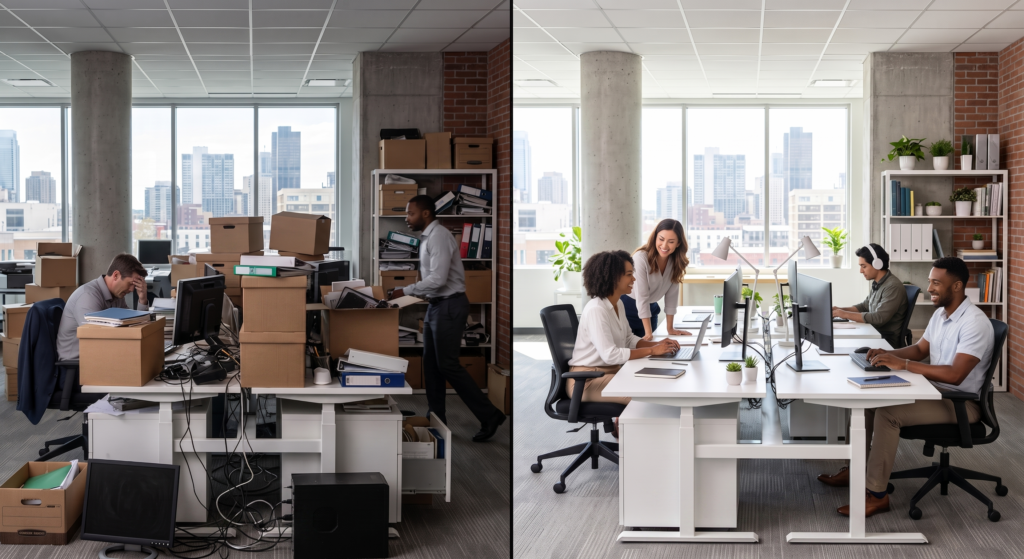
That space makes sense when it is being used by employees, customers, equipment or other parts of the business that actively contribute towards operations and revenue.
It makes considerably less sense when a spare office, storeroom or boardroom gradually fills with seasonal inventory, archived documents, promotional material, packaging or equipment that is used only occasionally.
In effect, the business is paying premium commercial rental rates to store inanimate objects.
Moving those items into dedicated storage can immediately change the economics.
The business storage advantage
Lower cost for storage space
Dedicated self-storage is intended specifically for storing goods rather than providing offices, meeting rooms, reception areas and other commercial facilities. This can make it a far more economical option for stock and equipment that does not need to remain inside your main premises.
Better use of vertical space
Storage space can also be used differently from an office. Shelving, stacking and appropriate organisation allow businesses to use the available volume more effectively. Instead of spreading cartons and stock across an office floor, businesses can organise them vertically and make much better use of the space available. For businesses operating in Randburg, Sandton, Bryanston, Rosebank and surrounding areas, this can be particularly useful. Stock and equipment can remain relatively close to the business without occupying expensive office or retail space.
2. Choose the Right Business Storage Unit
One of the problems with conventional commercial property is that businesses often end up paying for substantially more space than they currently need.
Business storage allows you to take a more flexible approach.
At Randburg Storage, businesses can choose from different unit sizes depending on what they actually need to store.
A business with only a small quantity of stock or documents does not necessarily need a conventional storeroom.
A micro locker, for example, can provide secure space for documents, files, samples, small stock items or other business materials.
Growing businesses may find that a 3 m² or 6 m² storage unit provides enough room for stock, equipment, records or seasonal inventory without paying for unnecessary space.
Larger units can accommodate significantly greater quantities of stock, furniture, equipment and business assets.
Match your storage space to your business
Different businesses have very different storage requirements.
A law firm may need somewhere to keep archived files.
An online retailer may need space for inventory and packaging.
An events company may need somewhere to store displays, furniture and equipment between events.
A contractor may need secure space for equipment or materials.
A growing company may simply need to clear valuable office space.
The objective is not to rent the largest unit available. It is to find a unit that matches what the business currently needs.
As requirements change, the business can reassess its storage rather than automatically carrying the cost of unused commercial space.
3. Turn Office Storage Space Back Into Revenue Space
Every square metre of an office has a cost.
Ideally, that space should contribute towards the operation or growth of the business.
When a spare office becomes a storeroom, there is therefore more than just the rental cost to consider. There is also an opportunity cost.
Imagine an office that is currently filled with cartons of stock.
The business pays rent for that space every month, but the room itself produces no income.
Move that stock into dedicated business storage, however, and the office can potentially be returned to productive use.
It could become:
- workspace for another employee
- a meeting room
- a sales office
- a consultation room
- additional retail space
- a packing or administration area
- space for equipment that is used every da
The same principle applies to retail premises.
Retail space should ideally be used to display and sell products rather than storing months of reserve inventory.
Think about the return on every square metre
A box sitting in the corner of an expensive office costs the business money every month.
A salesperson, consultant or productive employee working in that same space has the potential to generate revenue.
Moving non-essential stock and equipment offsite can therefore do more than reduce clutter.It allows the business to allocate its most expensive space to the activities that create the greatest value.
4. Create a More Professional, Productive Workplace
The financial argument for business storage is important, but there are operational benefits as well.
Offices often accumulate equipment, files, marketing materials, excess furniture and stock gradually.
Because it happens over time, businesses do not always notice how much working space has been lost until the environment becomes difficult to manage.
Moving items that are not required every day into secure business storage can immediately make the workplace easier to use.
Improve client perception
A clean and organised office generally creates a stronger impression than a workplace filled with boxes, stock and unused equipment.
This can be particularly important for companies that regularly receive clients, suppliers or investors at their premises.
Reception areas, meeting rooms and offices should ideally look like professional working environments rather than overflow storerooms.
Improve day-to-day efficiency
Clutter can also interfere with normal operations. Employees may need to work around boxes, move stock repeatedly or search through poorly organised storage areas to find what they need. Using dedicated storage allows businesses to separate items required every day from those that only need to be accessed periodically. The result can be a cleaner, more organised and more efficient working environment.
5. Secure Storage for Business Stock and Documents
Security is another important consideration when deciding where business assets should be kept. Stock, documents and equipment can represent a substantial financial investment. Leaving those items in an unused office, garage or poorly controlled storeroom is not always the best solution. Randburg Storage provides an indoor storage environment supported by security measures including 24-hour security, CCTV, electric fencing and controlled access. For businesses storing stock, equipment, business records or other important items, this provides a dedicated environment specifically intended for storage. It also allows businesses to separate stored assets from their everyday workplace.
This can be particularly useful for businesses holding:
- retail inventory
- e-commerce stock
- archived documents
- marketing materials
- exhibition equipment
- tools and equipment
- office furniture
- samples
- seasonal stock
- packaging materials
6. Business Storage for E-Commerce and Work-from-Home Businesses
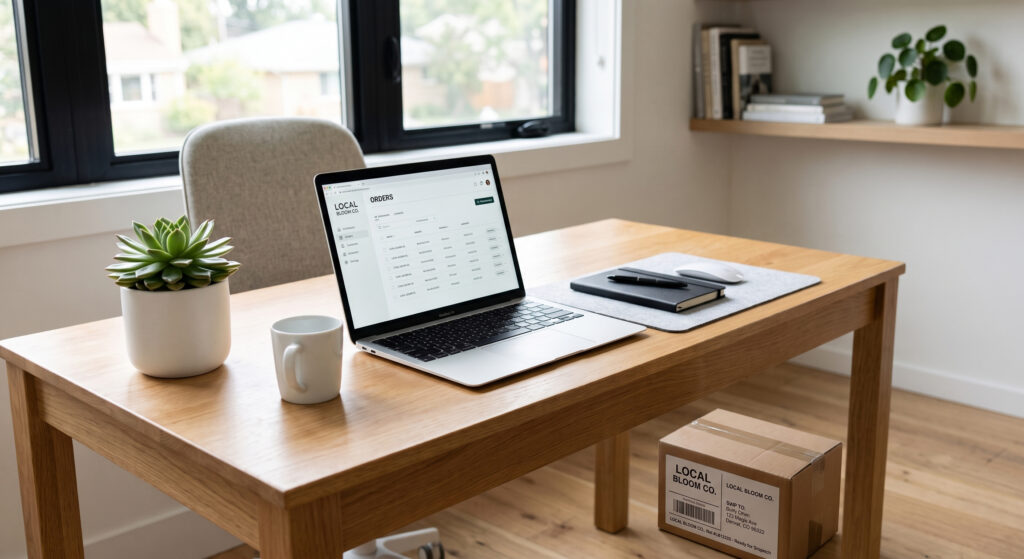
The way businesses operate has changed considerably. A company no longer necessarily needs a large office, warehouse or retail premises simply because it sells physical products. For many smaller businesses, an efficient combination of working from home and using offsite storage can dramatically reduce overheads.
Keep administration at home
Marketing, customer service, bookkeeping, sales and administration can often be handled from a home office. That can remove or delay the need to take on expensive commercial premises.
Keep stock out of your home
The problem normally starts when the products begin taking over the house. A spare bedroom becomes a stockroom. The garage fills with boxes. Packaging occupies cupboards. Eventually, the operational savings associated with working from home are offset by the inconvenience of running a warehouse from your living space. A dedicated storage unit creates separation between the two. The business can continue operating leanly while stock, packaging and equipment are stored elsewhere.
Scale storage as the business grows
This is particularly useful for e-commerce businesses because inventory requirements rarely remain constant. A business may hold additional stock before Christmas, Black Friday or another major sales period and then reduce inventory afterwards. Rather than committing immediately to a large warehouse, the business can use storage as part of a more flexible property strategy. For smaller online retailers looking for e-commerce storage in Johannesburg, this can provide a practical intermediate step between storing everything at home and committing to significantly more expensive commercial space.
7. Use Business Storage for Seasonal Inventory
Many businesses do not require the same amount of storage throughout the year. Retailers may increase stock before peak trading periods. Marketing companies may accumulate promotional materials for particular campaigns. Events businesses may have equipment that is only required at certain times. Companies may also need temporary storage during renovations, office relocations or periods of expansion.

Using offsite storage allows the business to accommodate those temporary requirements without permanently increasing the size of its primary premises.This is one of the major advantages of flexible business storage. Instead of designing your permanent property footprint around the busiest few months of the year, additional storage can be used when required.
8. Keep Archives and Documents Out of Valuable Office Space
Paper records may occupy surprisingly large amounts of office space. Boxes of historic files are often stored because a business needs to retain them but may only access them occasionally. Keeping those files in prime working space rarely makes financial sense. Dedicated document storage in Randburg can allow companies to organise archived records while freeing cupboards, storerooms and offices for everyday business use. Micro lockers and smaller storage options can also be particularly useful where the quantity of material does not justify renting a large storage unit. Documents should, of course, be organised and labelled properly before being moved so that individual records can still be located when required.
9. Avoid Expanding Your Premises Too Early
Growing businesses often reach a point where their existing premises begin to feel too small. The immediate reaction may be to move into a larger office, warehouse or retail space.Before doing that, it is worth asking a simple question: Does the business genuinely need more operating space, or does it simply need somewhere else to store things? There is an important difference. If employees do not have enough working space, expansion may be necessary. But if offices are simply filled with stock, furniture, equipment and archives, relocating those items may extend the useful life of the existing premises considerably.That can postpone the cost and disruption associated with moving to larger commercial premises. For a growing company, delaying a major property commitment until it is genuinely necessary can have a meaningful effect on cash flow.
10. Is Business Storage Right for Your Business?
Business storage can make sense whenever stock, records, equipment or seasonal items begin occupying space that could be used more effectively. A useful starting point is to look around your current premises and identify everything that does not need to be there every day. Then consider what that space is costing you. If a substantial portion of an expensive office, retail store or commercial property is being used simply for storage, moving those items offsite may be considerably more economical.
Business storage can be particularly useful for:
- small and growing businesses
- online retailers
- professional practices
- law firms and accountants
- retailers
- contractors
- events companies
- sales and marketing businesses
- businesses undergoing renovations
- companies moving premises
- businesses holding seasonal inventory
The right unit will depend on the quantity and type of goods being stored. A micro locker may be sufficient for documents or small stock holdings, while a 3 m², 6 m² or larger unit may be more appropriate for inventory, equipment and business furniture.
The Bottom Lineom Line
Business storage is not simply about finding another room in which to put things. Used correctly, it can form part of a broader strategy to control property costs, improve operational efficiency and make better use of valuable commercial space. Instead of paying premium office or retail rates to store stock, documents and equipment, businesses can move those items into dedicated storage and return their primary premises to productive use. For businesses in Randburg and surrounding Johannesburg areas, having secure storage nearby can also provide flexibility without requiring a long-term commitment to substantially larger commercial premises. Whether you need additional space for a seasonal inventory increase, somewhere to keep archived documents, storage for an e-commerce operation or a longer-term solution for business equipment and stock, the objective is the same:
Pay for the type of space you actually need and keep your expensive business premises working for the business.
Need Help Choosing the Right Storage Unit?
Not sure how much storage space your business requires? Tell Randburg Storage what you need to store and we can help recommend an appropriate unit size, from micro lockers and compact business units through to larger storage options. You can then compare the cost of dedicated storage against the space those items are currently occupying in your office, shop, warehouse or home.
Request a quote or speak to Randburg Storage about the most suitable storage option for your business.